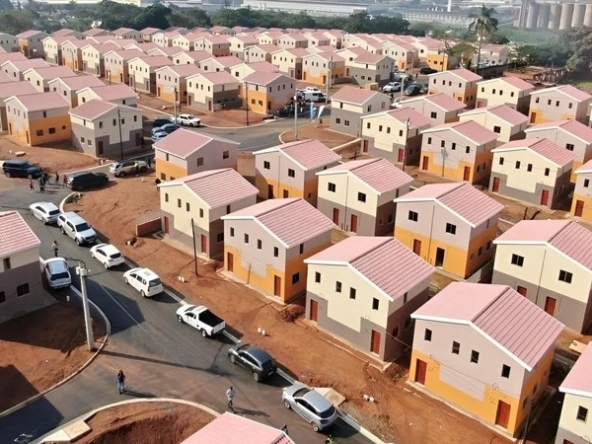
Cape Town is losing buyers with the data now confirming what many have suspected for some time.
This is that the Mother City is losing that argument on affordability.
The Western Cape’s average property price in Q1 2026 was R3,357,917- 72% above the national average of R1,951,230, says Nathan Scott, a Cape Town Property Strategist.
He says Gauteng now accounts for 50.8% of all property transfers nationally.
“Buyers are making rational decisions and Cape Town is losing that argument on affordability.”
“The numbers behind that shift are worth understanding. The average South African take-home salary in May 2026 was R20,262 in real terms – the lowest level in two years. Nominal salary growth of 1.7% is being outpaced by inflation. Household purchasing power is contracting.”
R2.5 million property in the Northern Suburbs requires a household net income of approximately R55.000 to R60,000 pm.
The property strategist says to qualify for a bond on a R2.5 million property in the Northern Suburbs – a standard 3-bedroom family home in Bellville, Durbanville or the Winelands corridor – a household needs a net income of approximately R55.000 to R60,000 per month.
He says the South African Reserve Bank’s (SARB) 25 basis point repo rate increase in May 2026, pushing prime to 10.5%, has compounded that pressure further.
He adds that the rental market offers no relief.
“Cape Town’s 26 877 active Airbnb listings have structurally reduced long-term rental supply.” “Landlords are pricing accordingly. Tighter credit bureau screening is closing the door on tenants with any prior payment history issues.”
The broader issue is structural, says Scott. He says land is being acquired, mixed-use developments are expanding the city’s footprint outward.
“The result is that suburbs within a 40km radius of the CBD-communities built around good schools, established infrastructure and decades of social investment-are becoming unaffordable for the very residents who built them.”
Increasingly inaccessible to the middle class it depends on
Scott says Cape Town delivers on services and infrastructure in a way most South African metros do not. “That is not in question. But that success has made the city desirable to the capital – and in doing so, has made it increasingly inaccessible to the middle class it depends on.
“A city that prices out its teachers, nurses, tradespeople and retirees is not a city that is winning. It is a city with a structural problem that the market alone will not resolve,” Scott says.
Affordability is a far bigger conversation than foreign buyers alone
Meanwhile, Finella Botes, the High-Value Property Consultant at Seeff Atlantic Seaboard says there is no doubt that international buyers have helped strengthen Cape Town’s luxury property market.
She says they see that every day, particularly along the Atlantic Seaboard.
“But affordability is a far bigger conversation than foreign buyers alone. Limited land, years of undersupply, semigration, rising construction costs, strong demand and Cape Town’s global appeal have all contributed to where the market finds itself today.It’s easy to point to one factor. The reality is that property markets are rarely driven by just one. Understanding the full picture is far more valuable than chasing a simple answer.”
Gauteng and the Western Cape account for 89% of all monitored inbound and outbound moves
Recently, Van Deventer Dowlath & Marx Inc said domestic relocation data from Wise Move confirms that Gauteng and the Western Cape account for 89% of all monitored inbound and outbound moves.
As Dr Roelof Botha highlights, this aligns directly with residential property price data from Stats SA and BetterBond
It says that the Western Cape recorded a real-terms increase in house prices of 7.7% in 2025. Gauteng commands 39% of all home loans granted via BetterBond in the 12 months to April 2026.
These figures represent thousands of transfers, bond registrations, and sectional title memberships being activated every year, the firm says.
It says high-volume markets expose legal vulnerabilities that quieter markets allow to lie dormant. Elevated transfer volumes place pressure on Deeds Office timelines, it adds.
Rising property values increase the financial stakes
According to Van Deventer Dowlath & Marx Inc, rising property values increase the financial stakes attached to defect disclosure obligations, capital gains tax implications, and title deed accuracy. The firm said in community schemes, rapid population turnover generates levy disputes, rule enforcement conflicts and trustee conduct complaints with predictable regularity.
“Active markets are also litigious ones. Breach of contract claims eviction proceedings under the Prevention of Illegal Eviction Act, and landlord-tenant disputes all increase as transaction volumes and property values rise together.”
Independent Media Property