
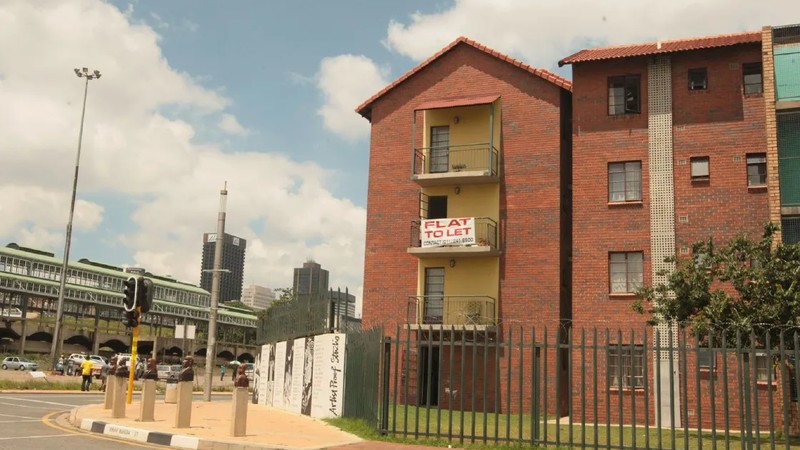

The lower residential house price bands have risen quickest in percentage terms over the last decade.
This is despite the gap between the higher and lower bands having widened. At the same time, homeownership among younger buyers has declined.
Property volumes down while prices went up
The analysis of data from 2014 to 2025 confirms that property volumes have drifted downwards while prices have escalated most significantly in the higher price bands, says Hayley Ivins-Downes, the managing executive Real Estate at Lightstone Property.
“Perhaps most revealing-and worrying-is the decline of buyers between the ages of 18-35, both in percentage terms from 40% to 30% but also in absolute numbers from 72 000 in 2014 to 47 000 in 2025.”
Structural affordability problem
Lightstone, the provider of comprehensive data, analytics, and systems to various industries, including the motor and property markets says that in fact, economists, policymakers, and institutions like the Organisation for Economic Cooperation and Development (OECD) and International Monetary Fund (IMF) have increasingly described this as a structural affordability problem, not just a temporary cycle.
The managing executive says there are several reasons behind the drop in younger buyers. She says these include lifestyle changes, house prices rising faster than wages, large deposit requirements, higher student debt, stricter mortgage rules following the 2008 global financial crisis, and in some cases, a lack of confidence in government or in the future.
“Implicit in this shift is a wealth transfer from young to old. We are seeing that the younger people rent from older people, often paying higher proportions of their income for housing. In the process, housing wealth has shifted towards older generations,” adds Ivins-Downes.
If this continues, several structural outcomes are likely, and they include:
• A permanent renter class emerges as homeownership is delayed or unattainable for many younger households.
• Large institutional landlords may expand or emerge where they don’t exist.
• Slower household formation as young people move out later and delay having children. This already appears to be happening in several countries.
• Political pressure and policy intervention as housing affordability grows in importance as a major political issue. Possible responses could include rent controls, large-scale housing construction, taxes on investors, and inheritance taxes on housing wealth.
• Long-term demand risk for housing markets. Ironically, if young buyers never enter the market, future housing demand could weaken. Housing markets historically rely on first-time buyers moving up the ladder. If the ladder breaks, transaction volumes will fall and prices become dependent on wealth transfers (inheritance, family help).
Where is SA property trending?
Residential property volumes have declined from 247 000 units sold in 2014 to 218 000 units in 2025, with just the Covid-bounce years of 2021 and 2022 bucking the trend.
Younger buyers have dropped and volumes have too, but what has happened with property prices and the mix of properties?
At the higher end (High Value and Luxury segments) considerations include asset inflation and capital flows (housing has become an investment asset and a store of wealth, not just shelter); supply constraints (due to zoning, planning restrictions and local opposition to development); demographic factors (older homeowners stay longer in homes, downsize less often and hold large amounts of housing wealth, all of which reduces turnover); and monetary policy (long periods of low interest rates after the 2008 crisis pushed asset prices higher, including housing).
Escalation of property prices in different area types
There is a growing gap between Luxury and other price bands, although the growth in percentage terms at 156% was less than Affordable (230%) but slightly more than High Value (150%) and Mid Value (141%).
The price of a home is not universal, though says Lightstone, and the difference a municipality can make – a property that cost R1m in 2014 would now cost R2.1m in Cape Town, R1.5 in Nelson Mandela Bay, R1.4m in eThekwini and Tshwane and just over R1.2m in Johannesburg.
What a R1m property in 2014 would cost in 2025
When looking at the sales volumes and property type a gradual gradual decline of Freehold sales over the years mirrored by the slow growth of Sectional Title properties. Estates as a percentage have more or less remained static.
Sales volumes per property type: 2014 – 2025
When it comes to value of sales, Freehold has slipped from 50% in 2014 to 48% in 2025, while Sectional Title has nudged upwards from 25.6% to 25.8% and Estates have moved from 24% to just over 26%. The trend is holding and lifestyle changes, which came during and immediately after Covid, could partly explain the shift.
Where to from here?
“South Africa’s housing market is resilient all round and robust in parts. Stabilising forces include population growth and immigration, which raise demand, and limited housing supply prevents large price drops.
“Business and investor confidence in the Western Cape drives the property market forward, and there are pockets elsewhere in the country where the higher price bands do well, such as the KwaZulu-Natal North Coast, parts of the Eastern Cape and the area around Hoedspruit,” says Ivins-Downes.
The likely outcome in many residential property markets without reform is lower homeownership, higher rents and greater wealth inequality, says the data provider.
In South Africa, affordable compartments have gained recent popularity and serve various purposes, says Prefabex, established in 2016, stands out as a distinguished
The design-build prefabricated building company and a direct manufacturer of modular buildings says these low-cost homes are utilised by governments to address housing needs and can also be used for personal use.
Their demand has surged significantly, particularly in the wake of the Covid-19 pandemic, it says.
What exactly are these low-cost houses?
Low-income housing is the answer to South Africa’s housing challenges. In reality, these affordable houses are not vastly different from traditional ones. They can be purchased with the same quality as conventional homes, as they are manufactured in factories as low-cost dwellings.”
Representing 70% of the residential sector, affordable housing holds the largest share and serves as the driving force of the local property landscape, said Rob Buthelezi, the chairman of RB Property Group recently.
Independent Media Property


