
The number of plans passed for entry-level/affordable homes across South Africa has dwindled over the past two decades, according to data released by StatsSA.
Between 2000 and 2005, municipalities approved plans for roughly 41 600 affordable units each year, says Sandra Gordon, an independent research economist.
She says Gauteng accounted for nearly 35% of these, the Western Cape for almost 20%, meaning just over half of all planned entry-level homes were concentrated in the country’s two most economically significant regions.
“However, by 2020-2025, the landscape looked quite different. Not only have annual approvals for affordable units slumped to an average of just 9 270 a year, but those units were increasingly concentrated in the Western Cape and Gauteng-at 33% and 41 %, respectively.
“That leaves just 25% of the substantially reduced number of planned affordable units allocated to the rest of the country.”
The national pipeline has grown both smaller and more concentrated
The economist says it is well-known that a growing share of total planned building activity has shifted towards the Western Cape in recent years, driven in part by the semigration of older, more affluent households to the region.
She says what is surprising is that a similar pattern is emerging in the affordable/ entry-level segment. Planned activity in the Western Cape has steadily closed the gap with Gauteng, a province with a younger population and a far larger base of first-time buyers.
The result is a national pipeline that has grown both smaller and more concentrated during the course of the past 25 years, and it’s happening at a time when South Africa’s young, rapidly urbanising population should be fuelling a far larger supply of entry-level housing, not facing a dwindling supply,” Gordon says.
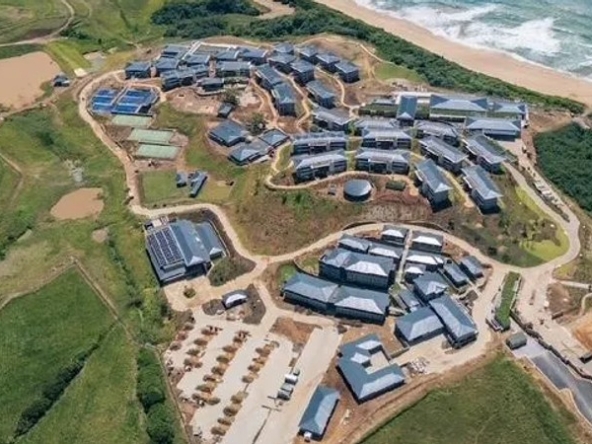
Earlier this month, David Masondo, the Deputy Minister of Finance, said the Divercity Urban Property Group in Cape Town was a clear example of how SA can use public investment to reshape cities and expand access to opportunity.
Demand for affordable rental housing far outpaces supply
He said the country faces a housing shortage of between 2.3 and 2.6 million units, with demand for affordable rental housing far outpacing supply.
“Developers like Divercity are part of the solution, delivering well-located, affordable housing closer to jobs, transport and essential services.”
The deputy minister said that through the Public Investment Corporation (PIC) investment on behalf of the Government Employees Pension Fund (GEPF), they were supporting a platform that is already creating over 1 100 jobs, with this expected to grow to 2 800 as it scales toward 15 000 units.
“This is about more than buildings. It is about reducing the cost of living, improving access to work, and restoring dignity, ensuring that where people live no longer limits their opportunities. We must continue to support scalable partnerships between public and private capital that deliver both strong financial returns and real social impact.”
The market is not only evolving, but expanding beyond traditional boundaries
Meanwhile, Lynn Pinn, a real estate consultant at Lynn Pinn Properties, says that the market is not only evolving but expanding beyond traditional boundaries.
She says the Western Cape remains a strong anchor, contributing 54% of total sales value over the past year, but what is particularly interesting is the rise of buyers from outside the province, now accounting for 16.4% of sales volume and 17.6% of value.
“Demand is no longer purely local; it is national, mobile and opportunity driven. International interest continues to play a significant role, with foreign buyers making up 24.9% of transactions, while their share of total value has adjusted slightly over the past year, their presence remains a key pillar of the market.”
Germany is said to lead the way, with the United States now emerging as the second largest international source of buyers, overtaking the UK.
The Netherlands, Switzerland and France further highlight the depth and diversity of global demand.
What this all reinforces is the importance of global reach, says Pinn. “Being part of a brand like REMAX means more than just local expertise; it means connecting properties to a worldwide audience through an established international network.
In a market shaped by both local momentum and global demand, that reach makes a meaningful difference.”
Independent Media Property