
While things are tough out there for many people right now, people are still chasing lifestyle in property.
And they are willing to pay a premium for it, says Finella Botes, the High-value Property Consultant at Seeff Atlantic Seaboard.
A lifestyle that prioritises convenience, security walkability and quality of life
Writing in a LinkedIn post on Monday, she said Cape Town’s so-called “15-minute neighbourhoods” stopped being a theory a long time ago. “They’ve become some of the most valuable property markets in the country and honestly, it’s not difficult to understand why.”
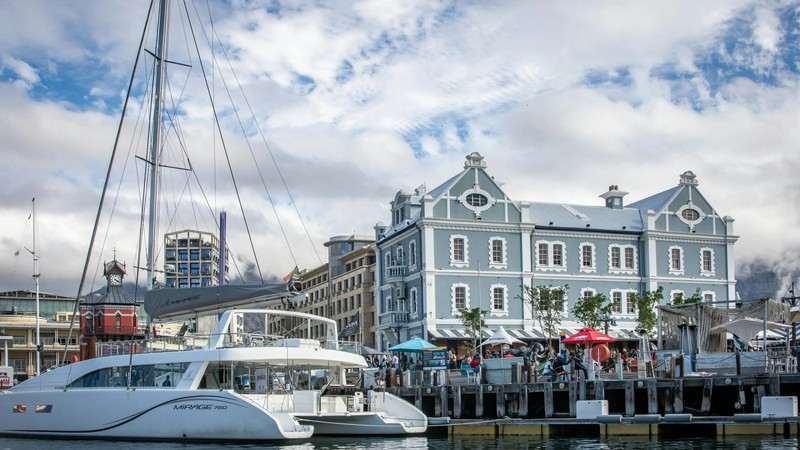
“In the V&A Waterfront Marina alone, we’re now seeing average property prices around the R18 million mark. That’s extraordinary by South African standards, but buyers today are not just purchasing square meterage. They’re buying into a lifestyle that prioritises convenience, security walkability and quality of life,”
The property consultant says people want to live where they can walk to restaurants, coffee shops, gyms, hotels, retail stores and the ocean. She says they want to work, socialise and live within the same environment without spending half their lives sitting in traffic.
That shift has fundamentally changed the value equation of property, she says.
Price growth of between 30% and 50%
“Over the last five years, mixed-use areas across Cape Town have seen price growth of between 30% and 50%, with annual growth rates reportedly sitting between 12% and 16%. And while the Waterfront remains one of the strongest examples of this, we’re seeing the same broader trend across the Atlantic Seaboard and City Bowl.
“Lifestyle integration has become a premium in itself
What also makes the Waterfront unique is that it operates on an international level. It’s not just a Cape Town destination anymore. Between the security, marina lifestyle, hospitality offering, limited stock and global buyer appeal, it has positioned itself within a completely different category of real estate. And the area continues to evolve.”
Long-term confidence statements in Cape Town as a luxury global city
According to Botes, the incoming Edition Hotel and private residences, together with the new superyacht marina development, are long-term confidence statements in Cape Town as a luxury global city.
She says that of course, these prices can feel difficult to comprehend locally and she understands that. “But internationally, prime coastal property in Cape Town still offers comparatively strong value.”
According to Lightstone’s full Residential Property Indices Report, National house price inflation has edged up to 3.85%. The data provider said the March 2026 data shows a property landscape dividing along both regional and segment lines:
•The Western Cape continues to outperform, though appears to be pulling back from recent highs – sitting at 8.28% against Gauteng’s 4.03%
•Limpopo is the only province in negative territory at -0.07%
• Luxury inflation has edged up to 5.21% while Low-Value has decreased significantly to 2.35% – the two ends of the market moving in opposite directions.
•The City of Cape Town leads municipal performance at 8.5%, while the City of Johannesburg sits at just 1.6%.
It says that for businesses and investors making decisions in property, the national figure is a starting point. It adds that the segment and regional breakdown is where the signal lies.
Cape Town’s luxury market is not slowing down
Meanwhile, Ross Levin, a Licensee/Owner at Seeff Atlantic Seaboard and City Bowl says that Cape Town’s luxury market is not slowing down. He says it is moving faster.
He adds that properties in Bantry Bay are reaching R65 million and beyond. “But it’s the speed at which properties are selling that sparks my interest. In the Atlantic Seaboard and City Bowl, we’re seeing over half of Atlantic Seaboard sales and roughly 71% of City Bowl sales conclude within a month. Many are selling within days of listing,” Levin says.
According to him, that only happens when three things align: serious buyer demand, correctly priced stock and very limited supply. “We’re also seeing a growing divide between ordinary stock and exceptional stock.
The best-positioned properties, with the right views, location, architecture, security or lifestyle offering, are commanding extraordinary attention. Buyers are decisive when they see something they believe is rare.”
International buyers remain active, so are buyers from Gauteng and KZN, along with Cape Town purchasers
The licensee says that importantly, this demand is not coming from one source alone. He says that while international buyers remain active, so are buyers from Gauteng and KZN, along with local Cape Town purchasers who continue to see long-term value in these areas.
Sectional title stock continues to dominate the market too, making up 76% of transactions across the Atlantic Seaboard and City Bowl, generating billions in sales activity, he adds.
Cape Town’s prime market has become highly competitive
“The reality is that Cape Town’s prime market has become highly competitive because demand continues to outweigh supply. And when that happens, the best properties don’t sit around for long,” Levin says.