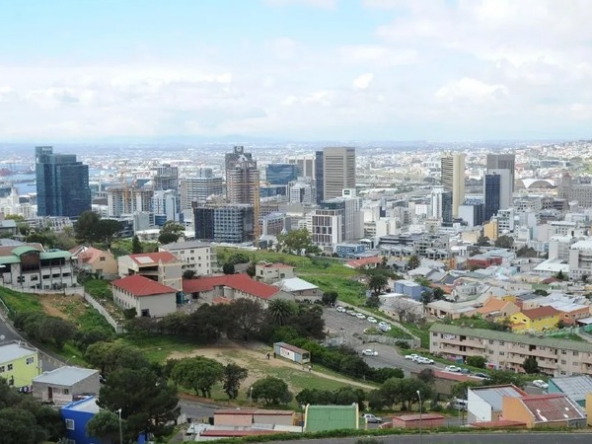
There is a growing focus on urban renewal and higher-density development within existing city footprints in South Africa, says Roelof van den Berg, the founder and CEO of Gap Infrastructure Corporation (GIC).
He says this is an important shift. “City growth is changing. Instead of spreading outward, development is increasingly taking place within existing urban footprints.
Infrastructure implications
The founder says this change has real implications for infrastructure.
“When more people live and work within the same space, pressure on transport networks, water systems, electricity supply and waste services increases significantly,” he said.
“It makes you think differently about infrastructure planning. Capacity, reliability and resilience become far more important when a larger population depends on the same underlying systems.”
Potential to create more efficient and vibrant cities
Urban densification has the potential to create more efficient and vibrant cities, van den Berg says. “In my view, the outcome will depend largely on the strength and resilience of the infrastructure that supports them.”
Current footprint in a state of disrepair requiring significant investment
However in SA, the systems that carry that current footprint are in a state of disrepair and would require significant investment to ensure that the view point of improving or making the current footprints more dense becomes a reality, says Pierre Kriegler, a Property and Asset Management executive responsible for portfolio performance, governance, compliance and long-term real estate value across multi-asset portfolios.
Last month, David Morema, the founder and the head specialist at Kuhle Solutions, who has decades of experience in local government and human settlements said he had the opportunity to participate in the eighth Masterclass hosted by the Institute of Human Settlements Practitioners South Africa. It was held at the University of the Free State, under the theme: “Reforming Human Settlements Delivery in South Africa: Climate Resilience, Infrastructure and Sustainable Finance.”
He says the sessions brought together a wide range of perspectives-from spatial planning and climate resilience to financing models and professionalisation of the sector.
Tension between reform and delivery
He says what stood out for him was the consistent tension between reform and delivery.
From the discussions and engagements, he says a few critical insights emerged:
•SA understands the problem well-but execution remains weak.
•The sector continues to face fragmentation, capacity gaps, and misalignment across spheres of government, which directly affects delivery outcomes.
•Housing must be treated as a system, not a product
The emphasis on a housing continuum and integrated delivery (infrastructure, transport, livelihoods) is long overdue, yet still not, embedded in practice
•Financing models are a structural constraint
Current subsidy approaches are not keeping pace with urbanisation pressures, and in some cases may be reinforcing inefficiencies and backlogs
•Climate resilience is no longer optional
The reality of disaster-driven displacement-particularly highlighted through case discussions-demands that resilience be built into all settlement planning and upgrading.
Sufficient policy, legislation and frameworks in place
The founder says his contribution to the discussions focused on a practical question, that is, “Are we over-emphasising reform, while under-investing in scaling what already works?”
He says there is sufficient policy, legislation, and frameworks in place- particularly within UISP and related instruments. The real gap lies in:
•Programme management discipline
•Stakeholder alignment and social compacting •Data-driven decision-making
•Institutional accountability
In short, he said the challenge is less about “what to do” and more about “how to do it consistently at scale.”
“The closing strategic dialogue reinforced the need for a clear, implementable reform roadmap, but equally, a shift toward delivery-focused execution models that integrate government, private sector, and communities.”
SA’s cities future shaped in informal settlements
In his final thought, if informal settlements are where the future of this country’s cities is being shaped, then its systems must evolve from managing compliance to enabling functional, inclusive and investable human settlements.