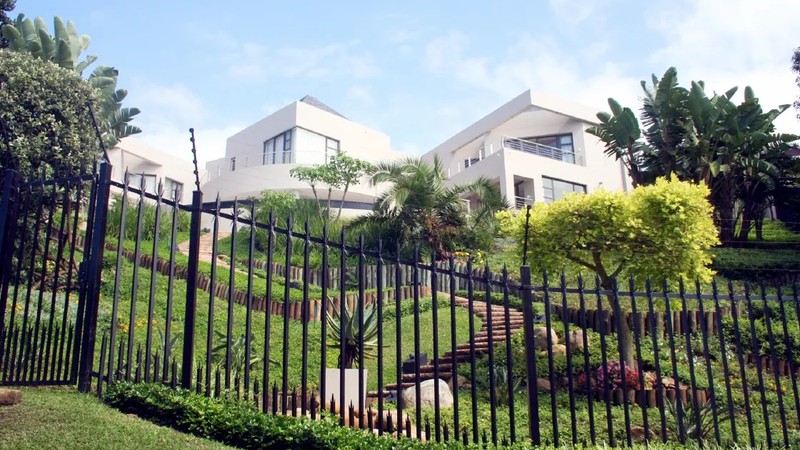

International property buyers are no longer looking at South African luxury homes as investments only, but also as places to live, work remotely, holiday and return to year after year.
While foreign buyers still make up a small percentage of South Africa’s overall housing market, new Lightstone data shows growing uptake in the luxury price bands.
Global buyers are comparing South Africa with other prime destinations
These numbers mirror what Just Property offices are seeing on the ground, says Paul Stevens, CEO of Just Property.
“This is not just a Cape Town story, or a luxury estate story – it’s a value story. Global buyers are comparing South Africa with other prime destinations and realising they can get space, setting, lifestyle and long-term benefits here at prices that are hard to match elsewhere.”
Foreign buying interest is currently strongest in the Western Cape, followed by Gauteng and then Limpopo.
According to Lightstone, foreign ownership accounts for just 6% of SA’s total residential housing market.
But above R4 million, the picture changes sharply: foreigners account for 15% of transactions between R4 million and R10 million, 26% between R10 million and R20 million, and 39% of sales above R20 million.
Foreign buying interest is currently strongest in the Western Cape at 7.8%, followed by Gauteng and then Limpopo.
Just Property says its internal data shows that foreign buyer priorities are secure, low-maintenance apartments close to restaurants, galleries and beaches; sea-facing homes, character properties in walkable pockets; and secure units on lifestyle estates.
According to Stevens, the search starts long before they arrive in SA.
“They browse online listings, watch video walk-throughs, research suburbs and speak to local agents about lifestyle, security, rental appeal and long-term value. By the time they get here in person, they’ve often narrowed the search to a few specific options.”
Rand comparison adds another layer of appeal
The rand comparison adds another layer of appeal, he adds.
“The Africanvestor’s 2026 Cape Town housing price guide cites a median Cape Town property price of about R3.4 million, or roughly €179,200, with a R7.2 million selling price equating to around €380,000.
When viewed against selected European city markets, where Global Property Guide’s 2026 square-metre data shows apartment prices can run into several thousand euros per square metre, South African luxury property can appear strongly priced by international standards.”
Foreign buyers are becoming more practical
From his experience, Stevens says foreign buyers are becoming more and more practical.
“The questions we’re being asked are less about whether SA is beautiful-that part is already clear-and more about how the property will work for them from day to day.
“They want to know whether the area is secure and well managed, whether the home can be rented out when they are not here, how easy it will be to maintain the property from overseas, whether there is reliable fibre and backup power, how close they are to restaurants, beaches, airports and medical care, and what the process involves if they eventually want to sell or move money offshore again.”
Buyer profiles that stand out
Three buyer profiles stand out right now, he continues.
“There’s the seasonal buyer who wants to spend part of the European winter in South Africa; the remote work buyer who needs fibre, security, space and easy airport access; and then the investment buyer looking for a lock-up-and-go property with strong rental appeal and long-term growth potential.”
For South African sellers hoping to attract international interest, the real estate company says foreign buyers respond well to homes that they can picture themselves using immediately.
“If the lifestyle story is clear-the view, the neighbourhood, the convenience, the security and the running costs-and the photographs are professional, it’s much easier for an overseas buyer to move from interest to action.”
Foreign luxury buyers are less exposed to the local pressures many SA buyers face
Foreign luxury buyers are also less exposed to the local pressures many South African buyers are facing.
“With the South African Reserve Bank’s repo rate at 7.00% and prime lending at 10.50%, affordability is a major factor for domestic buyers,” Stevens explains. “In the foreign luxury segment, however, purchases are often cash-driven or supported by offshore wealth.”
SA’s buying process is also easier to understand than many international buyers expect, says Stevens.
“Many high-end foreign buyers are in a strong cash position, so they don’t need to worry about local interest rates.
“And according to BetterBond, South African banks often offer non-resident buyers home loans of up to 50% of the purchase price if they meet the lending criteria. Add in the favourable exchange rate, and South Africa is a very attractive option for buyers looking for a premium lifestyle property with long-term value.”
SA gives international buyers a package that is becoming harder to find elsewhere
The CEO says SA gives international buyers a package that is becoming harder to find elsewhere: space, lifestyle, natural beauty and value in one place.
“For buyers, it’s an opportunity to own a home they can truly enjoy, not just an asset on paper. For sellers, if your property is well presented, well priced and easy for an overseas buyer to understand, it has a good chance of standing out in the global market.”
On Tuesday, Foreign Buyer Property Solutions said the South African Reserve Bank’s (SARB) updated harmonised Balance of Payments (BoP) codes are an important development that foreign buyers of SA property should take note of.
The integrated tax, immigration and cross-border advisory services for international property investors in SA say using the correct coding when introducing funds into the country is crucial to ensure the seamless repatriation of those funds when the property is eventually sold.
The new codes will come into effect from August 11, 2026.
SA is said to remain an exchange control jurisdiction, and the movement of capital across borders is closely regulated. The BoP reporting is the electronic message system authorised dealers (commercial banks) use to report cross-border transactions to the SARB.
For foreign buyers, the BoP code used when bringing money into SA to finance a property transaction is not about ticking a box. It declares the nature of the funds to the SARB, and the classification depends on the type of structure for the investment as well as what the property will be used for.
“There is no room for mistakes. The correct BoP classification will enable you to transfer your proceeds abroad when exiting the South African property market, while an incorrect code can result in delays when attempting to transfer funds or even freezing of your capital.”
With more than 800 categories and subcategories on the updated BoP list, it is evident that detailed and specific coding matters, the provider said.